
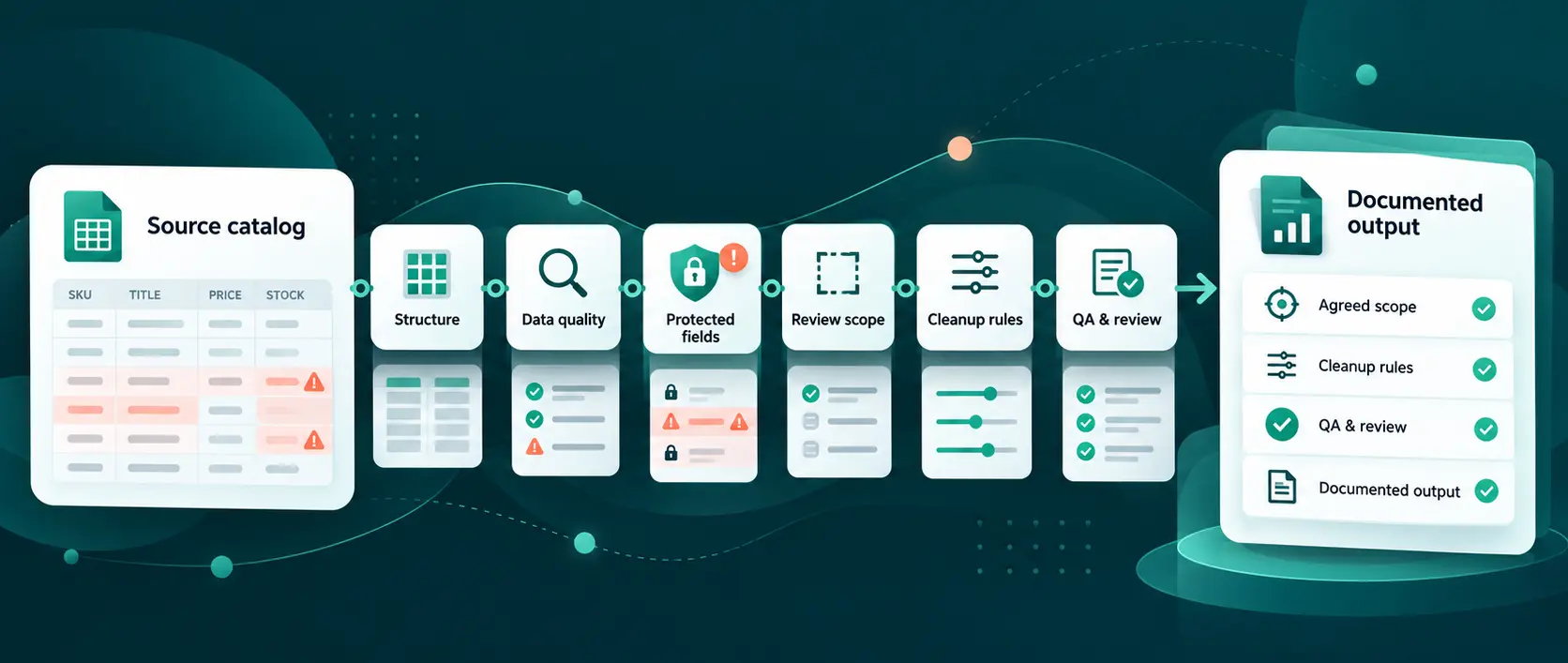
Shopify exports, supplier CSV files, ecommerce product exports, and other supported product-data files can be assessed during the Catalog Diagnostic. If the source structure is unusual or unsupported, we will tell you before full processing begins.
Yes, where the requested fields are supported and the scope is clearly defined. Not every project needs the entire catalog to be changed.
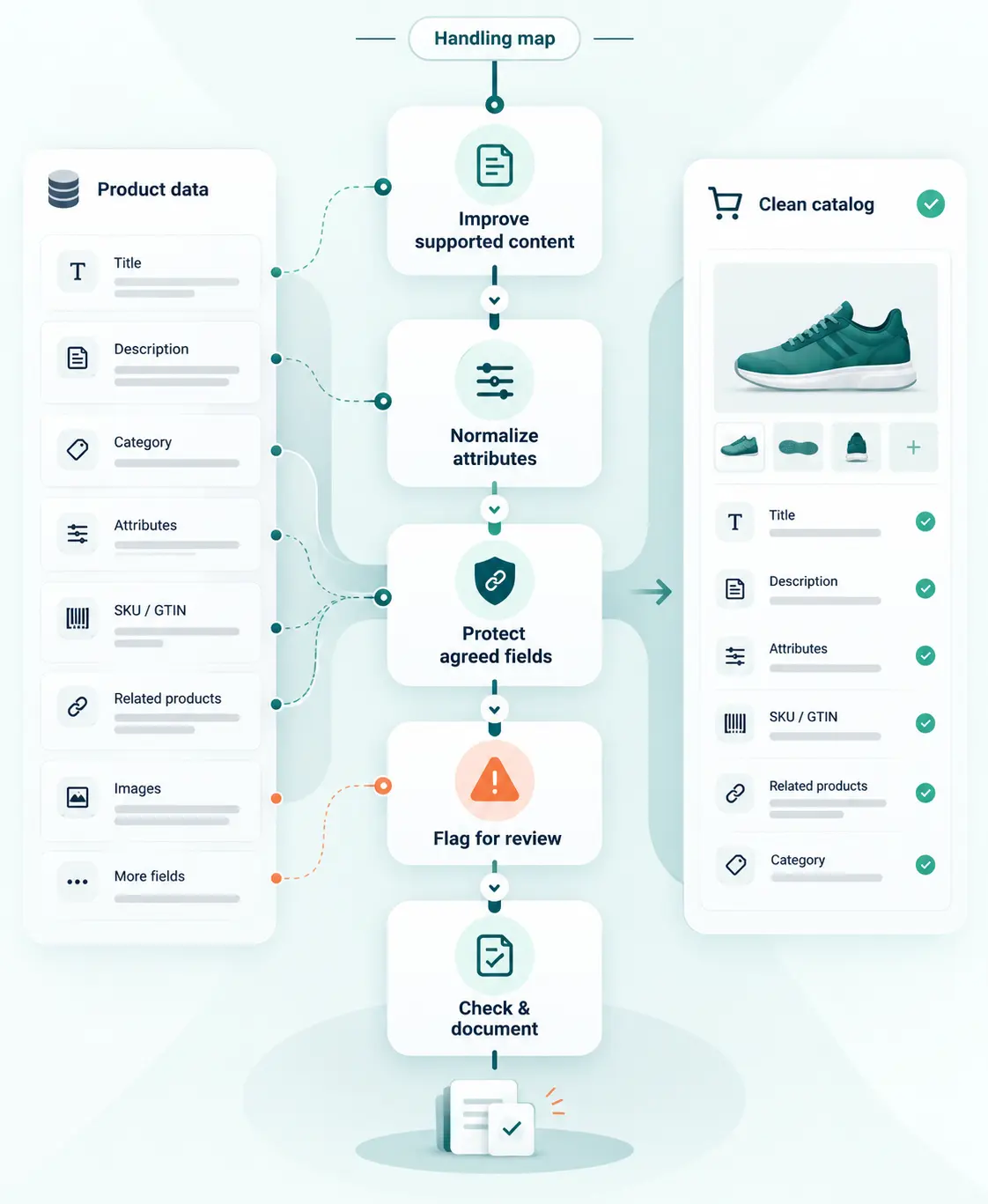
Not by default. Commerce-critical fields are handled according to the agreed project rules and are not treated like ordinary marketing content. Protected fields are identified during preflight.
Yes. SEO titles, meta descriptions, and product content can be included as part of the broader catalog cleanup where appropriate. SEO improvement is one layer of the service, not the entire service.
Missing or ambiguous information may be flagged for review rather than invented. The source data should support the changes being made.
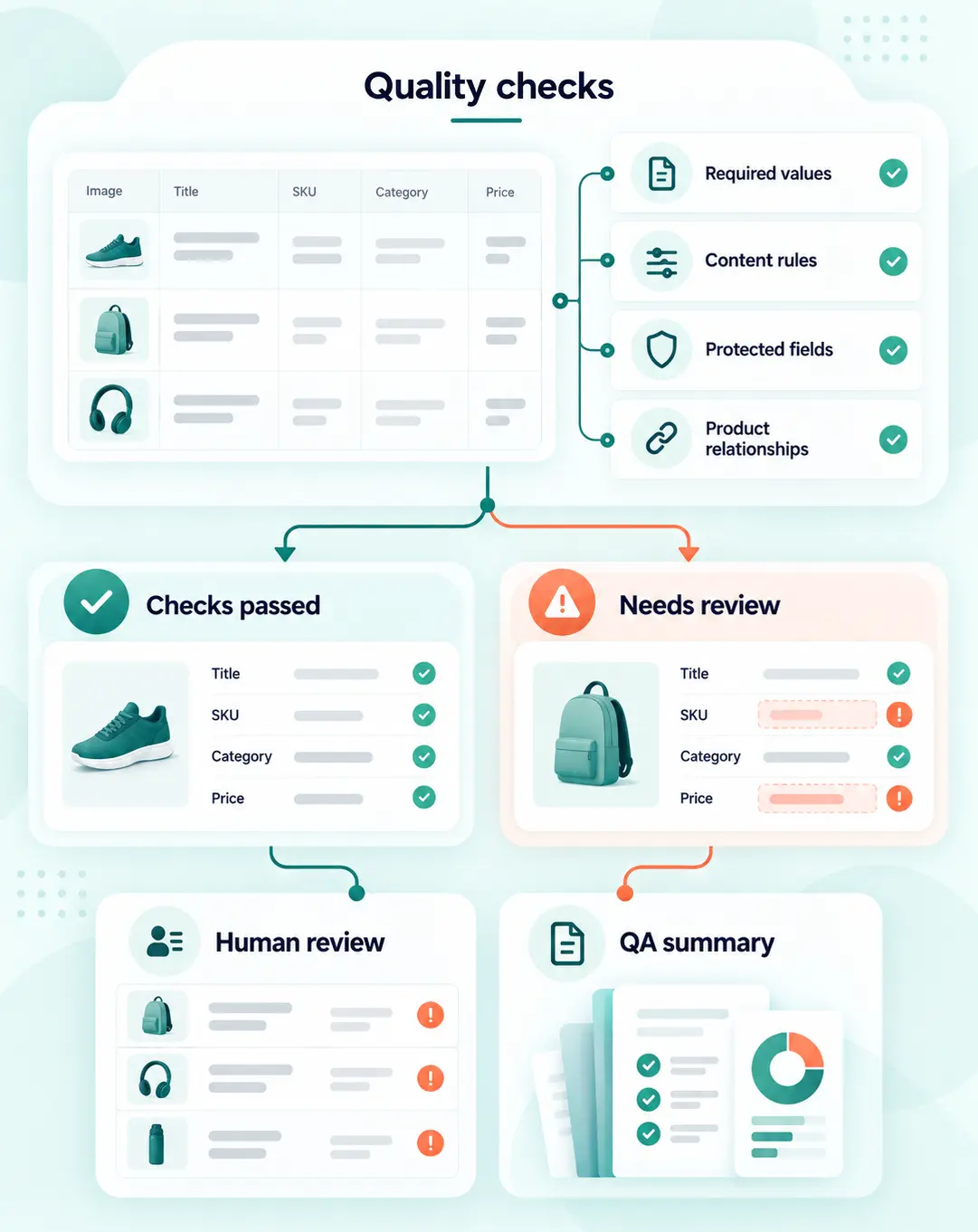
The catalog goes through structured automated checks, and records that fail defined rules or require judgment can be routed for human review. A broader manual review scope can also be discussed where appropriate.
Often, no. For standard catalog cleanup, we prefer working from exported files wherever practical. If access is genuinely required for a specific project, that would be discussed separately.
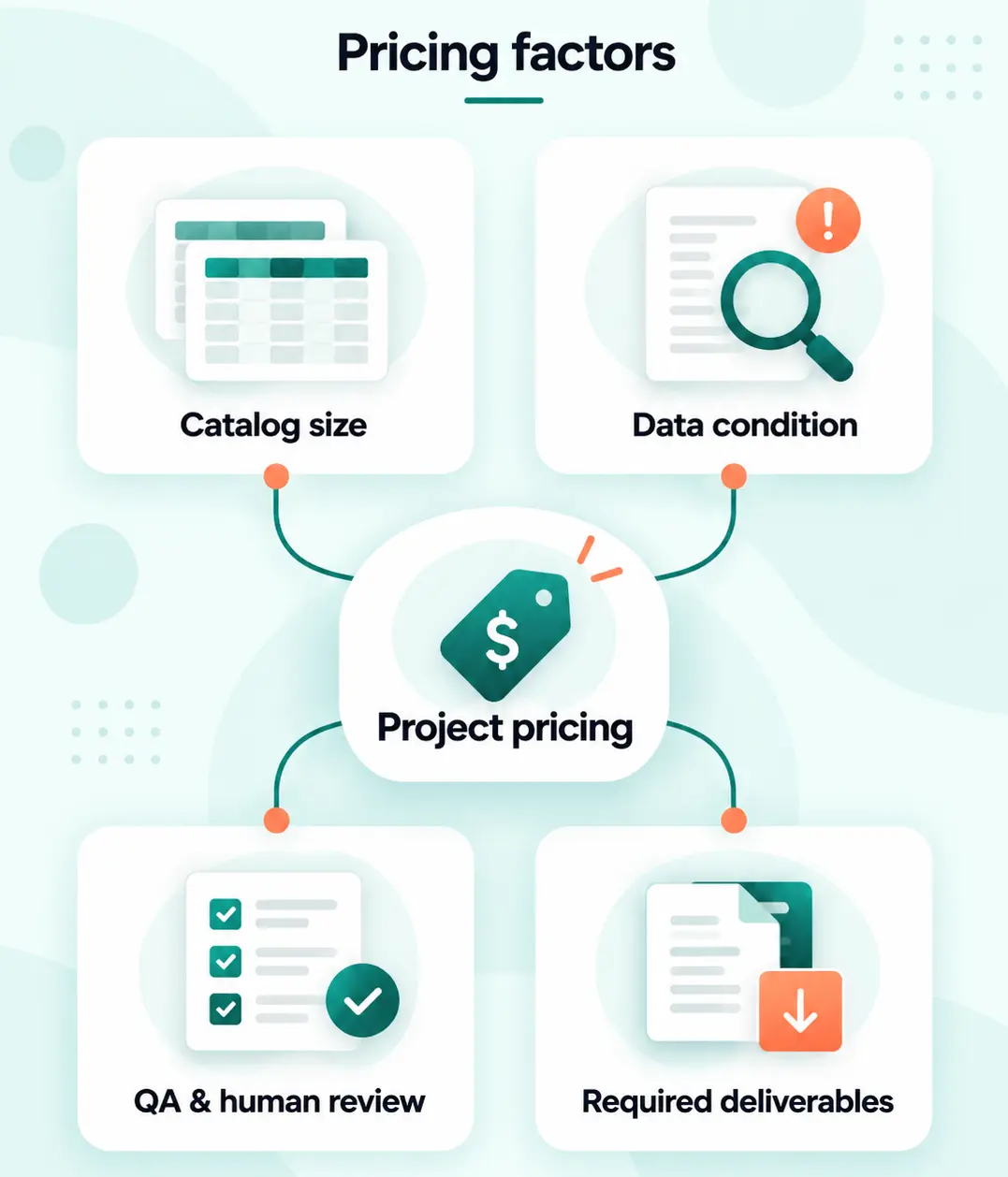
Potentially. Larger catalogs can benefit from structured processing and QA, but feasibility depends on product volume, variants, source-data quality, complexity, and expected human-review requirements. We'll assess these factors before confirming the project scope.